

Masking tape dispenser

Choose your option

Choose your option

Choose your option

Choose your option

Choose your option

Choose your option
Choose your option

Choose your option

Choose your option


Choose your option

Choose your option
Choose your option
Masking tape dispenser
Why Use Automotive Masking Tape?
Covering the rest of the vehicle’s body parts is important to protect areas not involved in the repair from paint residues. Body repair and painting operations can cause imperfections such as paint overspray. When working on a specific section, the surrounding areas must be covered to prevent stains, damage, or contamination.
This process, known as masking or marouflage, requires proper equipment to prevent accidental paint overspray or surface damage. In the automotive field, professional-grade masking materials are essential tools that allow body shop technicians to work efficiently and achieve a clean, precise result without affecting other vehicle components.
A good masking film or high-quality masking tape saves time, effort, and materials by minimizing the need for touch-ups and reducing waste. That’s why masking should never be overlooked — it’s a crucial step that requires precision and attention to detail.
The Different Types of Automotive Masking Tape
Masking products such as film rolls or tape have specific functions and must perform reliably under demanding conditions. Automotive masking tape should resist moisture, heat, and solvents while maintaining strong adhesion and preventing paint seepage. For the best results, professionals can choose from a wide range of masking tools and accessories:
Adhesive tape for bodywork:
Highly resistant to shear forces and high temperatures, it’s used to protect areas not being sanded and to clearly define work zones. Double-sided adhesive tape can also be used to join parts made of different materials.
Masking film:
Ideal for covering large body panels, masking film is easy to apply and prevents unwanted overspray or residue on other surfaces.
Automotive masking tape:
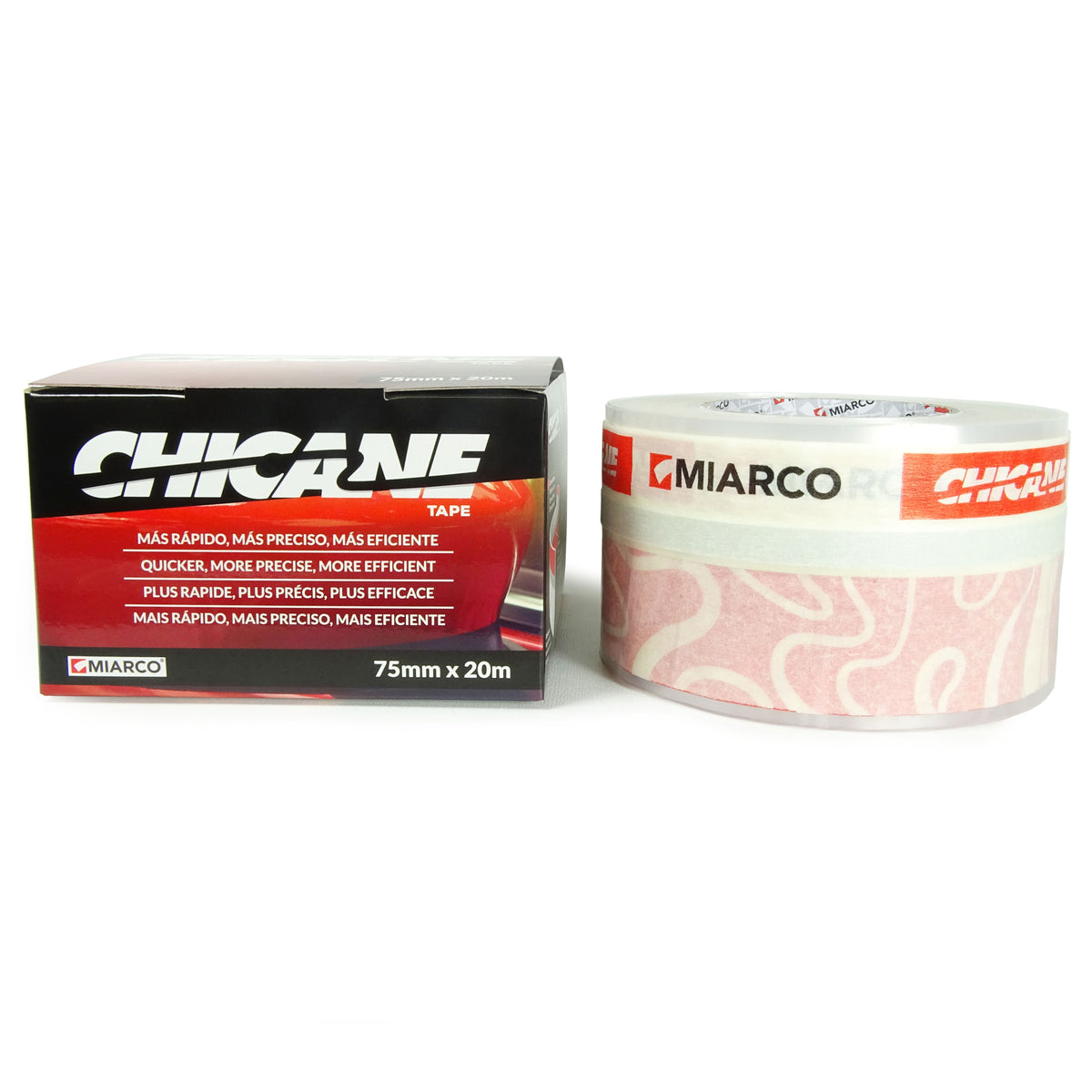
Used to secure masking film around the vehicle’s contours, this tape tears easily by hand and adheres well to curved surfaces. Several variants exist:
-
Windshield sealing tape – for masking trims around windshields and windows.
-
Foam masking tape – ideal for trunks, hoods, and door seams.
-
Joint protection tape – for hard-to-reach areas such as window edges, lids, hoods, or roof seams.
-
Reinforced masking tape – designed to protect surfaces during sandblasting.
Mesh masking:
Flexible and heat-resistant up to 130°C, mesh tape adapts to curves and is perfect for decorative or multi-color paint jobs.
Special wheel covers:
A dedicated wheel cover can be used to protect tires and rims during repair or painting. It helps apply paint without disassembling the wheels or damaging adjacent areas.
Kraft masking paper:
Specially designed kraft paper is easy to apply, fold, and cut. It’s commonly used to cover surfaces before applying primer, paint, or clearcoat.
Steps to Properly Mask Vehicle Parts
-
Clean the area to be repaired using a degreaser and a clean sponge to remove any residue.
-
Mask the rest of the vehicle or unaffected areas using your chosen film or masking materials.
-
Don’t forget small sections such as door openings or panel gaps.
-
Secure the masking film with automotive masking tape to prevent movement during painting.
-
Once everything is properly masked, the vehicle is ready for painting.
For any questions or additional information about our ColorBox masking products, feel free to contact us.


